





































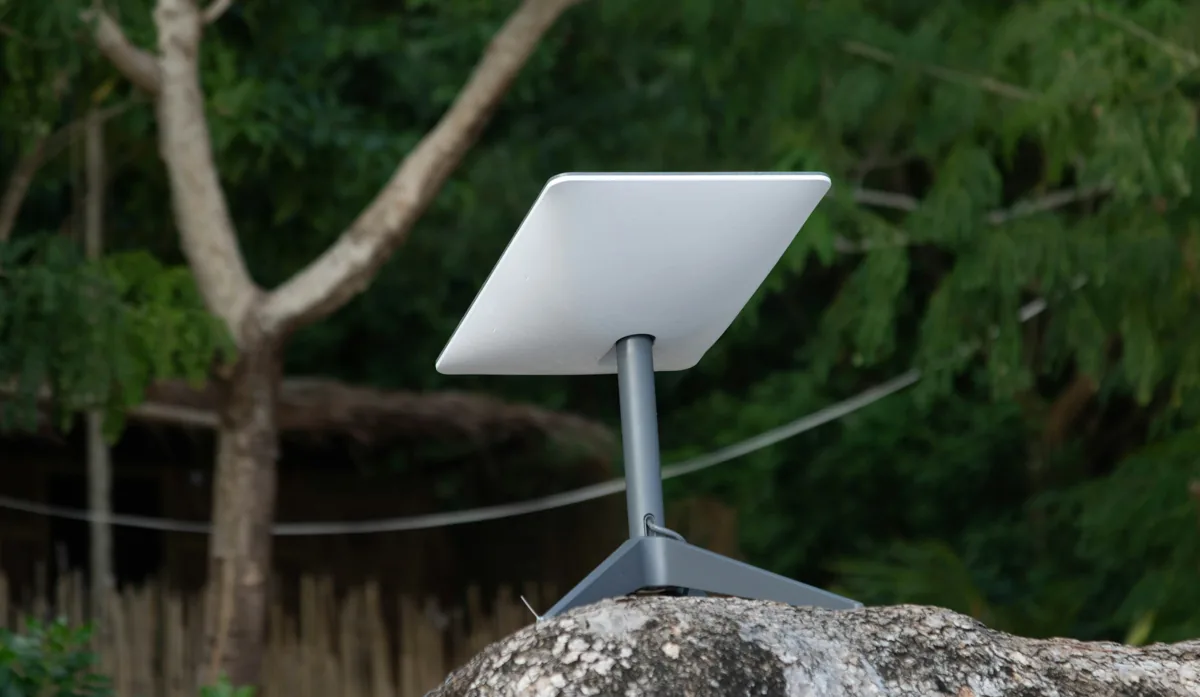
Satellite internet has changed more in the last few years than in the previous two decades. For Michigan businesses beyond the reach of cables, or those that need a backup that shares nothing with their main line, satellite is now a serious option. Here is how it works, the difference between old and new satellite service, and when it makes sense.
How satellite internet works
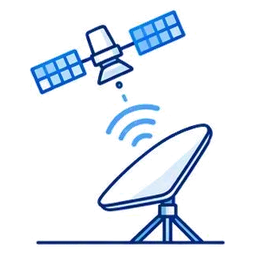
A dish at your location exchanges signals with satellites in space, which connect to ground stations linked to the internet. Because the signal travels through the sky instead of cables or poles, satellite works almost anywhere with a clear view of the sky, from a farm in the Thumb to a marina on Lake St. Clair.
Traditional satellite versus low-orbit satellite
Traditional geostationary satellite uses a few large satellites parked about 22,000 miles above the equator. Every request travels that distance up and back, so response times are slow, often more than half a second. Video calls lag, cloud apps feel sluggish and plans usually come with data caps.
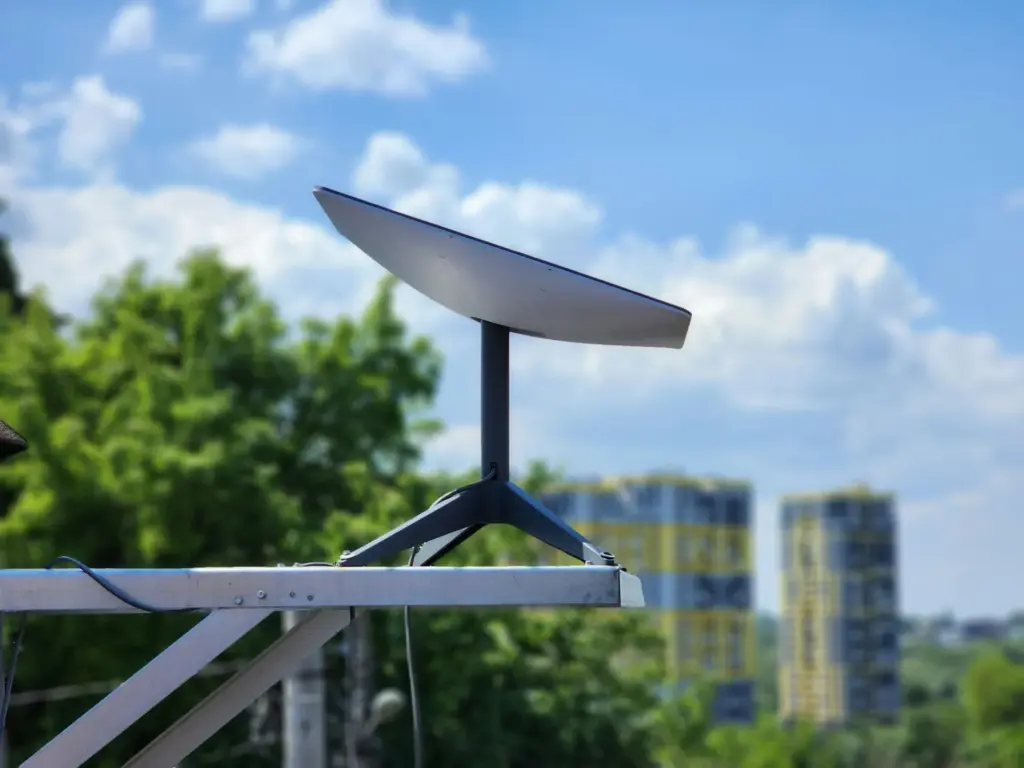
Low-earth-orbit (LEO) satellite, such as Starlink, uses thousands of small satellites only a few hundred miles up. Response times are far lower, speeds reach hundreds of megabits per second, and video calls, VoIP phones and cloud software work well. For business use, LEO is the type to choose.
When satellite makes sense for a business
- Rural and remote sites with no fiber, cable or fixed wireless coverage.
- Seasonal and waterfront locations such as marinas, campgrounds and resorts.
- Construction and temporary sites that need internet in days.
- Farms and agricultural operations spread across large properties.
- Independent backup for critical businesses, because satellite shares no cables, poles or towers with your main connection.
How satellite compares to other options
- Fixed wireless: where available, it offers dedicated, symmetrical speeds and a written uptime guarantee. In metro Detroit it is usually the better primary connection.
- Fiber: the fastest and most consistent option where it reaches your building, but it can take months to build.
- 5G: quick to set up and a good backup, but it depends on cell coverage, which can be weak in rural Michigan.
- Satellite: works almost anywhere and installs quickly, with lower upload speeds than fiber or fixed wireless. It is ideal where nothing else reaches, or as a fully independent backup.
Getting business satellite internet right
A consumer dish set up on a picnic table is not a business connection. A professional install includes a secure, weather-rated mount with a clear view of the sky, clean power with battery backup for critical sites, a business router with a firewall and separate networks, automatic failover, and 24/7 monitoring.
Cronus installs and manages Starlink for business across Detroit and Michigan, as a primary connection for remote sites or as backup alongside fixed wireless, fiber and 5G SD-WAN. Read when Starlink makes sense as primary or backup, or request a quote.
Frequently asked questions
Is satellite internet good for business?
Modern low-earth-orbit satellite is good enough for most business use, including video calls and VoIP. Traditional geostationary satellite is usually too slow to respond for cloud apps and calls.
What is the difference between LEO and geostationary satellite?
LEO satellites orbit a few hundred miles up, giving much faster response times. Geostationary satellites are about 22,000 miles up, which adds noticeable delay.
Can satellite internet be a backup connection?
Yes. Because it shares no cables or towers with your main line, satellite is an excellent independent backup with automatic failover.
Does Cronus install satellite internet in Michigan?
Yes. Cronus installs, mounts, configures and monitors Starlink for businesses across Detroit and Michigan.