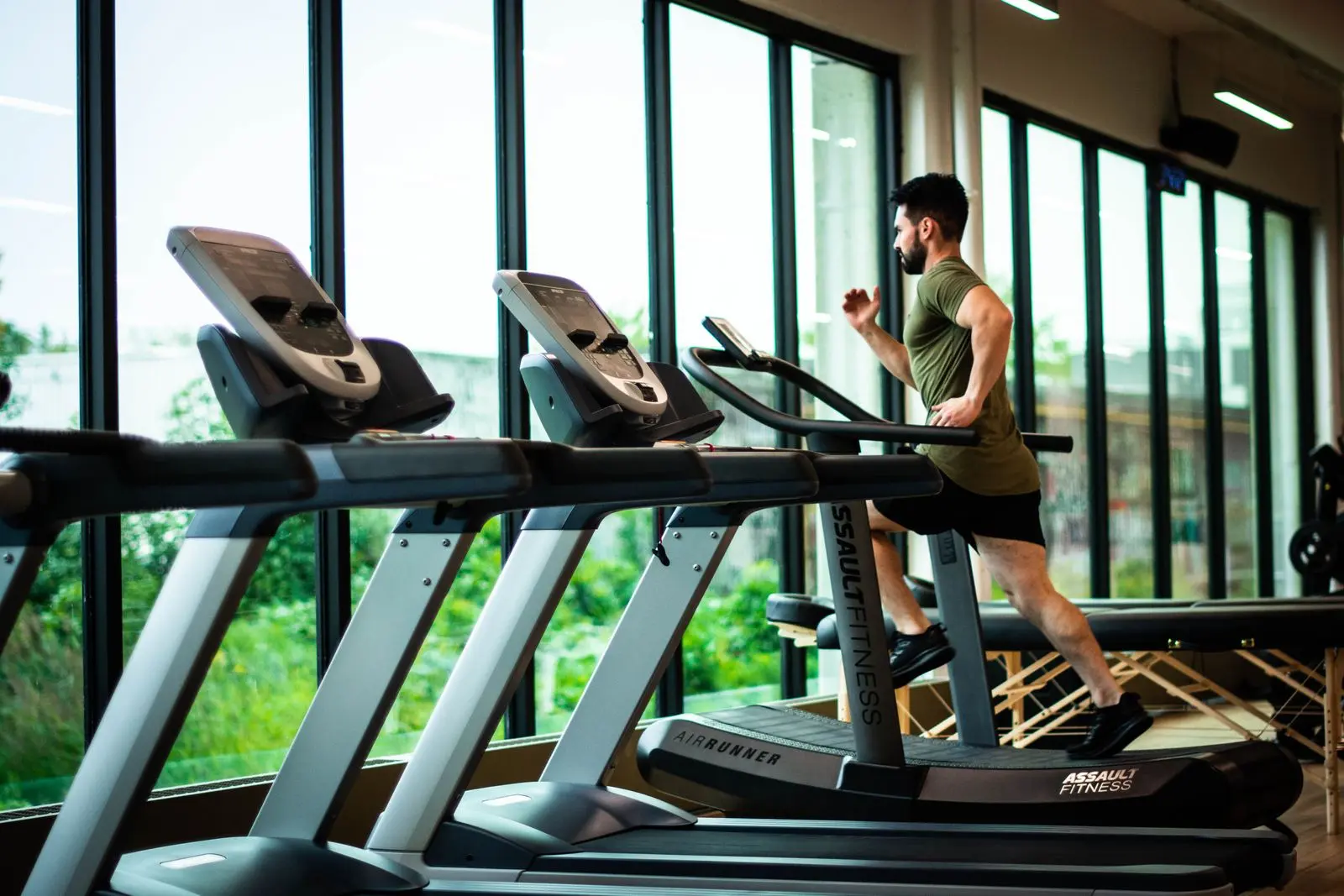






































Walk through any busy Detroit gym at 6:00 PM and count the screens. Treadmills streaming shows, phones syncing workouts to smartwatches, an instructor live-streaming a class to members at home, and a front desk checking people in through an app. The whole experience runs on one thing: fitness center internet Detroit gyms can trust when every device in the building lights up at once.
This guide covers what today’s members expect from a connected gym, how streaming equipment and hybrid classes change your bandwidth math, and how Cronus Internet helps Detroit fitness operators turn connectivity into retention and revenue.
What Today’s Members Expect From Their Gym
The fitness industry is in a growth phase. According to the Health & Fitness Association, 81 million Americans belonged to a gym, studio, or other fitness facility in 2025, an all-time high that represents 26.1 percent of the population aged six and older. Facility visits reached an estimated 7 billion, and the share of members who never used their membership fell to a record-low 4.6 percent.
More members showing up more often means more devices on your network. HFA data also shows that Gen Z adults have the highest membership penetration of any age group at 35.5 percent, and that cohort arrives with expectations shaped by streaming, apps, and instant connectivity.
Streaming Workouts and Wearable Sync
Wearable technology is the number one trend in the ACSM 2026 Worldwide Fitness Trends survey of 2,000 exercise professionals, with mobile exercise apps ranking fourth. ACSM notes that nearly half of U.S. adults now own a fitness tracker or smartwatch, a figure consistent with a Journal of Medical Internet Research study that found 44.5 percent of nearly 24,000 U.S. survey respondents owned a wearable, with ownership highest among younger and urban consumers.
Those devices sync workouts, heart rate zones, and class results in the background. When your WiFi drops a connection mid-session, the member notices the missing data before your staff notices the outage.
Reliable WiFi Throughout the Facility
Gyms are hard environments for wireless. Concrete floors, mirrored walls, steel racks, and dense crowds all degrade signal, and a single access point near the front desk will not reach the far corner of the weight room or a basement spin studio. Coverage planning means multiple access points, separate networks for members and operations, and enough backhaul to feed all of them.
Cronus Internet has designed high-density wireless for public spaces, parks, and event venues across Detroit, including the Wi-Fi network for the 2024 NFL Draft. The same principles apply to a facility where hundreds of members connect at the same time.
Connected Equipment and Smart Fitness
Cardio remains the backbone of gym usage. HFA’s expanded 2025 report found that 43.4 percent of members used treadmills, the most frequently used equipment in the study. Modern cardio machines are also the most bandwidth-hungry devices in the building.
Cardio Machines With Streaming Entertainment
Touchscreen consoles on treadmills, bikes, and ellipticals stream video, virtual courses, and guided workouts over your network. The FCC Broadband Speed Guide lists 5 to 8 Mbps as the minimum for streaming HD video and 25 Mbps for 4K. A cardio floor with 40 screens streaming HD at peak hour needs roughly 200 to 320 Mbps for those machines alone, before a single member phone connects.
Unlike a member scrolling social media, a streaming console holds a continuous connection for the entire workout. Congestion shows up as buffering on a screen 18 inches from the member’s face.
Performance Tracking Integration
Connected equipment also reports performance data back to your platform and to the member’s app: distance, watts, heart rate, and workout history. This traffic is small but constant, and it is sensitive to latency. Cronus Internet’s fixed wireless service is engineered for sub-5-millisecond latency, which keeps cloud-based tracking responsive even while the cardio floor is streaming.
Virtual and Hybrid Class Offerings
HFA reports that 22.6 percent of members worked with a personal trainer and 32.3 percent took part in small-group training in 2024, both historic highs, and notes that operators are investing in hybrid membership models. Delivering coaching beyond the studio walls is now a standard offering rather than a pandemic workaround.
Live-Streaming Instructor-Led Classes
Live streaming flips the usual bandwidth equation. Streaming a class out of your building is an upload task, and most consumer and cable plans offer a fraction of their download speed on upload. The FCC guide lists 6 Mbps as the minimum for HD video teleconferencing, and a multi-camera studio stream with clean audio needs stable upload headroom well above that figure.
A symmetrical business connection, where upload matches download, removes that constraint. Cronus Internet’s fiber internet service and fixed wireless service both provide the symmetrical capacity a live studio needs.
On-Demand Content Libraries
Recorded classes let members train at home, on the road, or in the gym on their own schedule. Building that library means uploading large video files from your facility to a hosting platform, and serving it means members stream from the cloud, not from your network. The upload side is where a gym’s connection matters most, especially if instructors record and publish several sessions a week.
Member App Engagement and Retention Data
Retention is the metric that decides a gym’s profitability. HFA’s 2026 consumer report recorded a decade-low industry churn rate and rising average membership tenure for 2025, which means the operators keeping members are pulling ahead.
Technology is part of that story. In an HFA feature on how gyms use member data to increase retention, one global operator’s chief intelligence officer described how a branded app that lets members track goals and access coaching keeps them coming back more frequently and staying longer.
Class booking, check-in, challenges, and push notifications all run through that app, and every one of those features is exercised inside your building. An app that cannot load at the front desk during the evening rush is worse than no app at all.
Bandwidth Planning for Peak Gym Hours
Gym traffic is spiky. Early morning and early evening compress most of the day’s usage into two windows, and your connection has to be sized for the peak, not the average. Using the FCC per-activity figures as a baseline, a mid-sized Detroit facility at 6:00 PM might be running:
- 40 cardio screens streaming HD video at 5 to 8 Mbps each
- One live class streaming out at 6 Mbps or more of upload
- 150 or more member phones syncing apps, wearables, and music
- Front desk check-in, point of sale, and cloud management software
- Security cameras, access control, and digital signage
The FCC also cautions that multiple users and devices running at once need more capacity than any single-activity number suggests. In practice, that means planning for headroom, symmetrical speeds, and the ability to scale as you add equipment. Cronus Internet offers burstable bandwidth that can be adjusted as your needs change, with fixed wireless speeds up to 10 Gbps and fiber up to 1 Tbps, all backed by a 99.99 percent SLA and 24/7 monitoring from a Michigan-based network operations center.
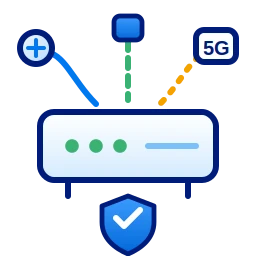
Redundancy matters too. A gym that cannot check members in or process payments during an outage loses money and goodwill by the minute. A cellular SD-WAN failover connection keeps critical systems online if the primary link is interrupted.
Revenue Opportunities From Connectivity
Members are willing to pay for fitness. An HFA survey found that Americans plan to spend an estimated $60 billion on health and fitness goals in 2026, averaging about $61 per month, and 86 percent said access to a gym, studio, or health club is important to reaching those goals.
Connectivity opens several ways to capture more of that spend. Premium membership tiers can bundle on-demand content and live-stream access. Connected cardio with streaming entertainment supports higher-tier pricing. Virtual personal training extends a coach’s reach beyond the hours they are physically on the floor. Reliable guest WiFi keeps day-pass users and corporate wellness participants coming back. Each of these depends on a network that performs at peak hour, which is why connectivity belongs in the revenue conversation, not just the IT budget. Cronus Internet has written about how business internet service improves productivity, and the same logic applies to a gym floor.
Frequently Asked Questions: Fitness Center Internet in Detroit
How much bandwidth does a gym need?
It depends on how many streaming consoles, live classes, and connected members you serve at peak hour. Using the FCC Broadband Speed Guide, HD streaming needs 5 to 8 Mbps per screen and HD video conferencing 6 Mbps per stream, so a facility with dozens of streaming machines and a live studio should plan a dedicated business connection with headroom well above the arithmetic total.
Do gyms need symmetrical internet?
Yes, if you live-stream classes or publish on-demand content. Those tasks depend on upload speed, and consumer plans typically provide far less upload than download. A symmetrical business connection removes that bottleneck.
Why does gym WiFi perform poorly even with a fast connection?
Coverage and density are usually the problem, not the internet service itself. Concrete, mirrors, and steel equipment block signal, and too few access points force hundreds of devices to compete for the same channel. Proper access point placement and network segmentation fix most in-building complaints.
Does connected fitness technology improve member retention?
Industry data suggests it helps. HFA has reported that technology such as branded apps and goal tracking keeps members returning more frequently, and its 2026 consumer report recorded a decade-low churn rate for 2025 as digital and hybrid offerings became standard.
Is fixed wireless a good option for a fitness center?
Yes. Cronus Internet’s fixed wireless service installs from a rooftop antenna with no construction, delivers speeds up to 10 Gbps with sub-5-millisecond latency, and is backed by a 99.99 percent SLA, which suits facilities that need capacity quickly.
Why work with a local Detroit internet provider?
A local provider can send a technician to your facility, understands the specific buildings and rooftops in Metro Detroit, and has a direct stake in keeping you online. Cronus Internet has served Detroit businesses since 2008 as the first and only privately held internet service company based in Detroit.
The Bottom Line on Fitness Center Internet in Detroit
Streaming cardio, wearable sync, live classes, and member apps are how Detroit gyms compete for the 81 million Americans who now hold a membership. Each of those experiences is only as good as the connection behind it, and members judge the gym, not the network, when something stalls.
Whether you run a boutique studio or a multi-floor health club, Cronus Internet brings the local expertise, symmetrical bandwidth, and redundancy that connected fitness demands. Visit the Cronus Internet news page for more connectivity guidance for Detroit businesses, or request a quote today and give your members a gym that never buffers.