








































When a Detroit business shops for internet, the choice often comes down to two options that look similar on paper: cable internet from a large national provider, or fixed wireless internet from a local network. Both can advertise fast download speeds, and both can be installed without tearing up the street. But the way each one works, and what that means for your business on a busy afternoon, is very different. Here is how fixed wireless and cable compare, and how to decide which fits your business.
How Cable Internet Works
Cable internet runs over the same coaxial lines that once carried cable television. A single line serves an entire neighborhood or building, and every customer on that line shares its capacity. When few people are online, speeds can be excellent. When the whole block is busy, speeds drop, because everyone is drawing from the same pool. Cable plans are also built around downloading, so upload speeds are usually a small fraction of download speeds.
For a home that mostly streams video, that tradeoff is fine. For a business that sends large files, runs video meetings, backs up to the cloud and records security cameras offsite, slow uploads become a daily bottleneck.
How Fixed Wireless Works
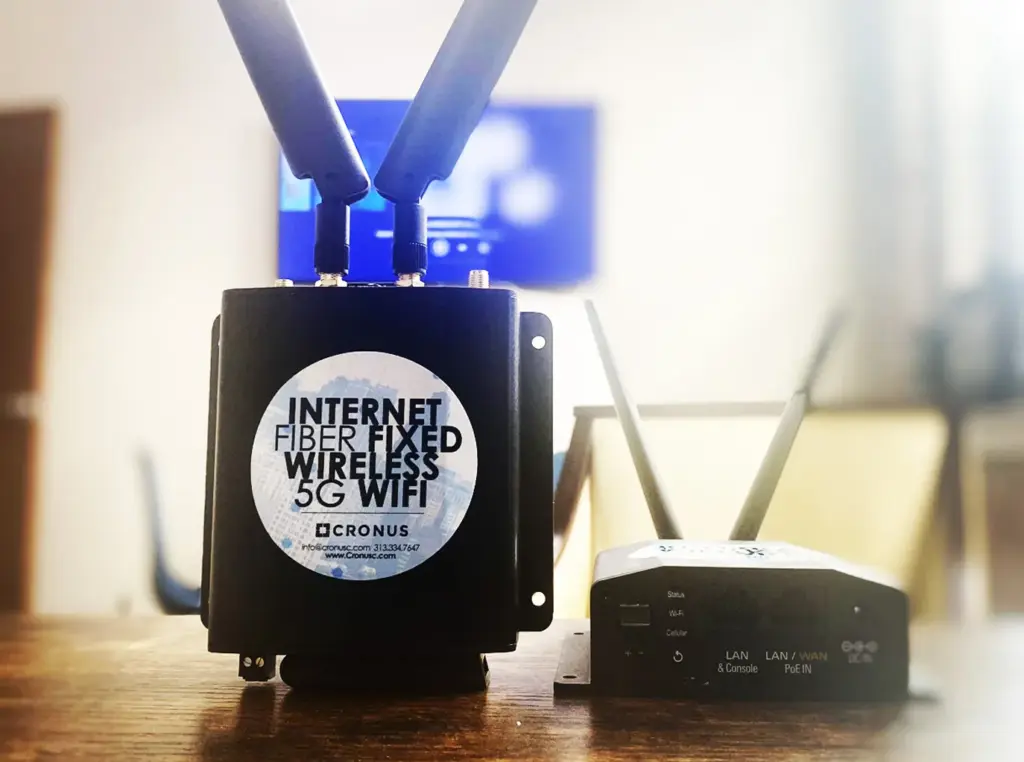
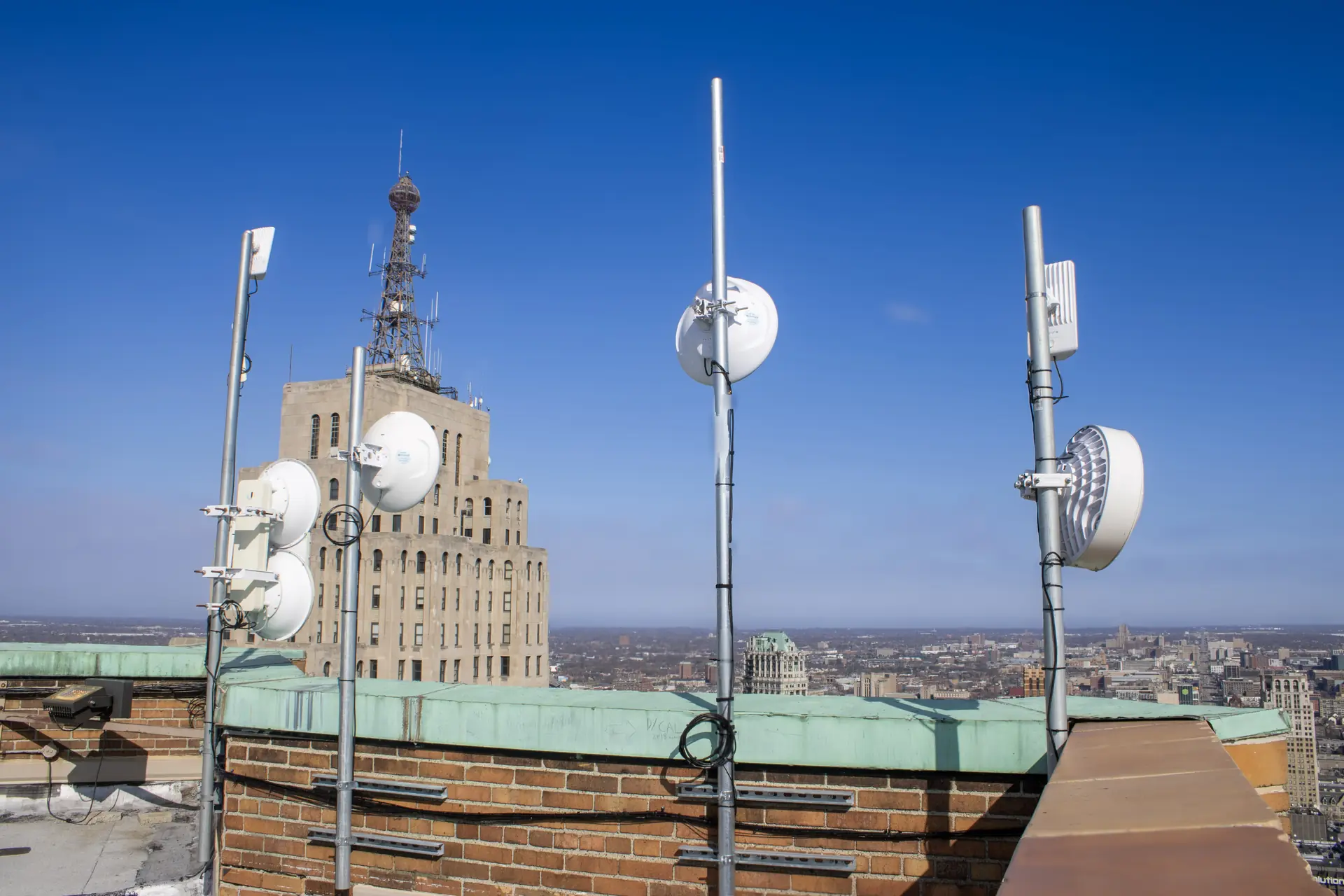
Fixed wireless delivers internet by radio between a small antenna on your building and a tower site on the provider’s network. The equipment stays in place and is aimed precisely, which makes it very different from cellular or satellite service. Because the link is engineered for your building, a fixed wireless provider can dedicate capacity to your business rather than sharing it with the neighborhood, and can offer upload speeds that match download speeds.
Cronus runs its own fixed wireless network in Detroit, with plans up to 10 Gbps, so we control the speed and quality from your rooftop to the internet.
Speed: Download and Upload
Cable providers often lead with large download numbers, but the upload number is what many businesses feel most. Video calls, VoIP phones, point-of-sale systems, cloud software and security cameras all send data out of the building. A fixed wireless connection with symmetrical speeds keeps those tasks fast even when the office is full. When comparing quotes, always ask for both numbers and whether they are guaranteed or simply the best possible case.
Reliability and Support
Reliability depends as much on the people behind the network as on the technology. With a large cable company, a business is often one of thousands of accounts in a regional queue, and a repair visit can take days. A local fixed wireless provider monitors its network around the clock and can usually see a problem before you call. Cronus runs a Network Operations Center in Detroit, so the person who answers knows your connection and the technician who visits works for us.
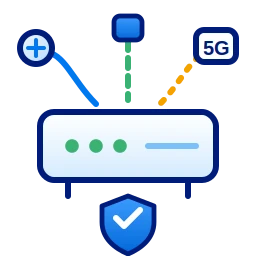
Weather is a common question. Modern carrier-grade radios are built to run through rain and snow, and every Cronus link is monitored continuously. For businesses that cannot afford any downtime, we add an automatic 5G backup connection so service continues even if something does go wrong.
Installation
Cable is quick to install if the building is already wired, but a business in a building without service can wait weeks for the provider to extend its lines. Fixed wireless only needs a clear line of sight from your roof to the provider’s network. Once that is confirmed, most installations are completed in days, often in a single visit, with no trenching or construction.
Cost
Cable plans can look inexpensive, especially with promotional pricing, but businesses should compare the full picture: the price after the promotion ends, the cost of static IP addresses, contract length, and what the service level agreement actually promises. Fixed wireless pricing depends on the speed you choose and how your building connects, and it is typically competitive with cable at business-grade speeds while including dedicated capacity and local support.
Which Should Your Business Choose?
Cable can be a reasonable choice for a very small office with light internet needs and no sensitive uptime requirements. Fixed wireless is usually the better fit for businesses that depend on video calls, cloud software, VoIP phones, card payments or security cameras, for businesses with several employees online at once, and for any location where waiting weeks for installation is not an option. Many businesses also use both, with one connection as the primary line and the other as an automatic backup.
If you are comparing options for a Detroit or Metro Detroit location, contact Cronus with your address. We will confirm whether your building can connect to our fixed wireless network, usually within one business day, and give you a clear quote to compare against your current service.